_左右_透明背景.png)
Blue Aspirations’ floating LiDAR wind measurement system has achieved six months of successful, stable operation in an international offshore area. Powered by the advanced technical solutions and rigorous operation and maintenance management, the system delivers exceptional system stability and data reliability under complex sea conditions, with all core indicators reaching industry-leading levels.
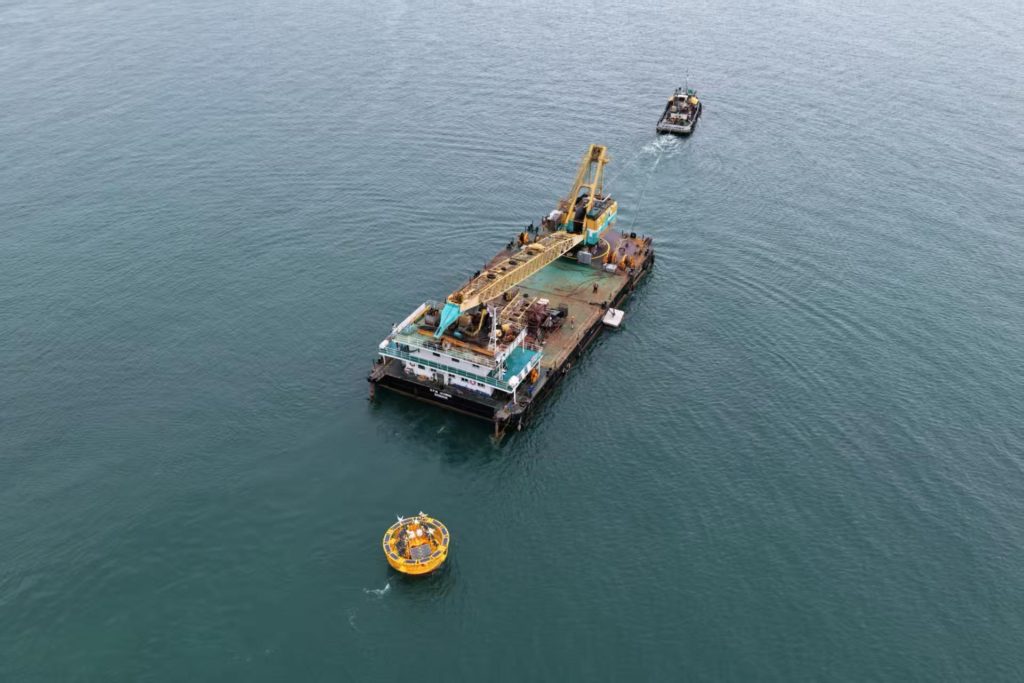
Innovative Mooring and System Protection Design Ensures Stable Operation Under Extreme Sea Conditions
The system features a “three-layer protection” scheme combined with a redundancy design for critical components, significantly enhancing its offshore survivability and effectively reducing the risk of data loss. For mooring, a combined solution of ‘steel anchor chain + concrete sinker block + steel hook anchor’ is adopted. Targeting the weak points in the mooring system, our company has carried out targeted optimization and safety design to minimize the risks of buoy dragging anchor and chain breakage.
Localized Deployment and Security Protection: Building a Data Security Barrier
To meet data security and compliance requirements, the project’s backend management system is deployed on the cloud platform designated by the client. All data storage and processing are completed locally and do not enter Chinese territory. The core functional modules of the system are independently developed by Blue Aspirations. Localized deployment, end-to-end encryption, and dual authentication mechanisms are implemented to ensure data security and permission control.
To address interference caused by buoy motion, an innovative edge-side data preprocessing solution has been adopted. A motion compensation algorithm performs raw data calibration directly on the buoy, achieving “data purification before transmission.” This approach not only avoids secondary errors caused by packet loss during remote transmission but also reduces the volume of invalid data transmitted and minimizes the exposure of sensitive raw data, thereby establishing a robust line of defense for data privacy and security.
Excellent Half-Year Operation Data Validates System Reliability
As of February 28, 2026, the project has operated continuously and stably for six months. During this period, the average system voltage was 24.82V, far exceeding the safety threshold of 23.5V; the average offset distance of the buoy was only 42.04 meters, well below the safety range of 150 meters. Overall, the system has remained in excellent operating condition.
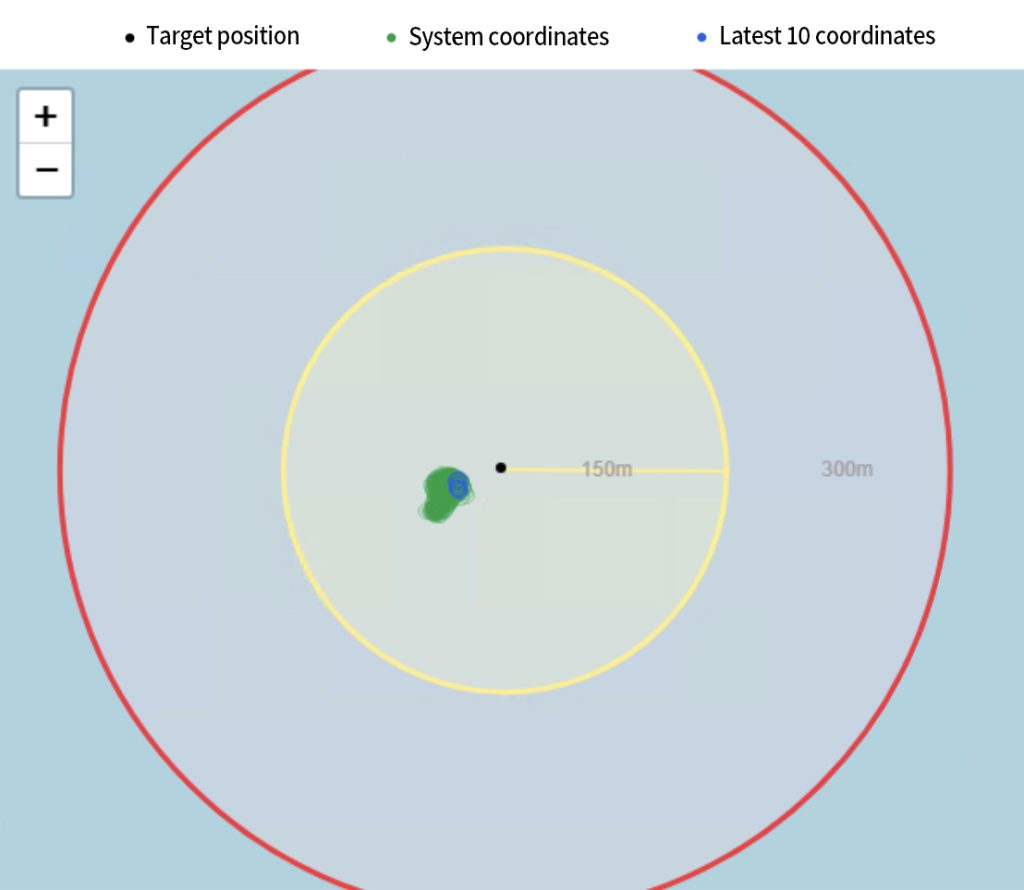
Data Availability is Over 99%, Core KPIs Leading the Industry
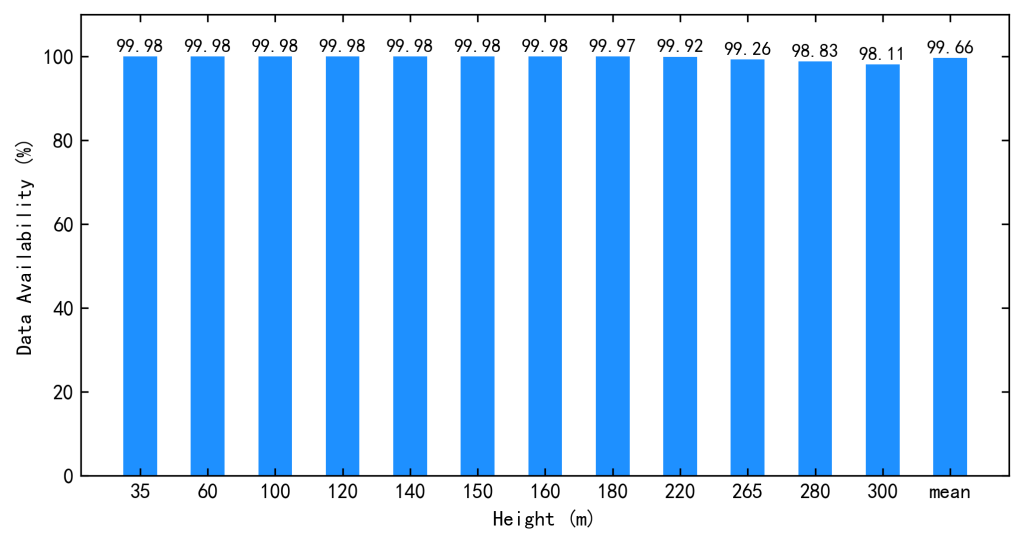
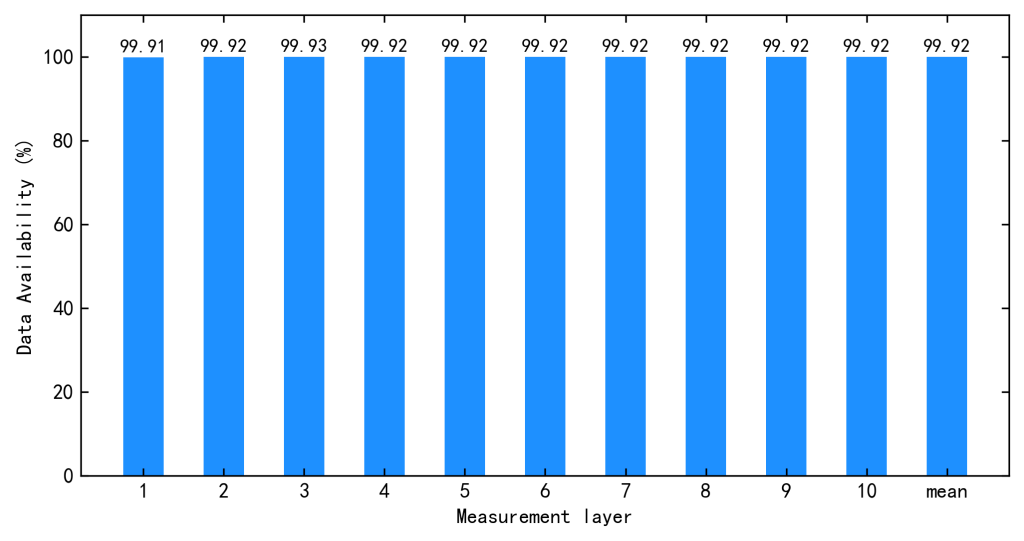
The system measures four types of data: wind, wave, current, and tide. The six-month operation data shows that the overall system availability reaches over 99.99%, with an average valid data availability of over 99.66%. Among them, wind, current and tide data system availability reaches 100%, wave data system availability reaches 99.99%; data availability of all types remains above 99.66%, fully verifying equipment reliability and data quality stability.
| KPIs | Wind | Wave | Current | Tide |
| System Availability (%) | 100 | 99.99 | 100 | 100 |
| Data Availability (%) | 99.66 | 99.99 | 99.92 | 99.93 |
Monitoring of wind data availability at different heights shows stable data transmission from multiple monitoring points from the sea surface to high altitudes, providing accurate multi-dimensional data support for wind resource assessment. Current data also demonstrates excellent availability across different measurement layers, meeting the high-precision requirements of marine environmental research and engineering design.
The successful operation of this project fully demonstrates our technical strength and project management capabilities in the field of marine environmental monitoring. Moving forward, we remain committed to advancing offshore clean energy development—delivering more efficient and reliable monitoring solutions to global customers while supporting the pursuit of carbon neutrality.